THE MORNING: The sun has risen upon Jerusalem. But the priests and scribes have not waited all this time without venting their rage upon Jesus. Annas, who was the first to receive the divine Captive, has had Him taken to his son-in-law Caiphas, the high priest. Here He is put through a series of insulting questions, which disdaining to answer, He receives a blow from one of the high priest’s servants. False witnesses had already been prepared: they now come forward, and depose their lies against Him who is the very Truth: but their testimony is contradictory. Then Caiphas, seeing that this plan for convicting Jesus of blasphemy is only serving to expose his accomplices, turns to another. He asks Him a question, which will oblige our Lord to make an answer; and in this answer he, Caiphas, will discover blasphemy, and blasphemy will bring Jesus under the power of the Synagogue. This is the question: ‘I adjure Thee, by the living God, that Thou tell us, if Thou be the Christ the Son of God! [1] Our Saviour, in order to teach us that we should show respect to those who are in authority, breaks the silence He has hitherto observed, and answers: Thou hast said it: I am: and hereafter ye shall see the Son of Man sitting on the right hand of the power of God, and coming in the clouds of heaven.’ [2] Hereupon, the impious pontiff rises, rends his garments, and exclaims: ‘He hath blasphemed! What further need have we of witnesses? Behold! now ye have heard the blasphemy: what think ye?’ The whole place resounds with the cry: ‘He is guilty of death!’ [3]The Son of God has come down upon the earth in order to restore man to life; and yet, here we have this creature of death daring to summon his divine Benefactor before a human tribunal, and condemning Him to death! And Jesus is silent, and bears with these presumptuous, these ungrateful, blasphemers! Well may we exclaim, in the words wherewith the Greek Church frequently interrupts to-day’s reading of the Passion: ‘Glory be to thy patience, O Lord!’Scarcely have the terrible words, ‘He is guilty of death,’ been uttered, than the servants of the high priest rush upon Jesus. They spit upon Him, and blindfolding Him, they strike Him, saying: ‘Prophesy, who is it that struck Thee?’ [4] Thus does the Synagogue treat the Messias, who, they say, is to be their glory! And yet, these outrages, frightful as they are, are but the beginning of what our Redeemer has to go through.
But there is something far more trying than all this to the heart of Jesus, and it is happening at this very time. Peter has made his way as far as the court of the high priest’s palace. He is recognized by the bystanders as a Galilean, and one of Jesus’ disciples. The apostle trembles for his life; he denies his Master, and affirms with an oath that he does not even know Him. What a sad example is here of the punishment of presumption! But Jesus has mercy on His apostle. The servants of the high priest lead Him near to the place where Peter is standing; He casts upon him a look of reproach and pardon; Peter immediately goes forth, and weeps bitterly. From this hour forward he can do nothing but lament his sin; and it is only on Easter morning, when Jesus shall appear to him after His Resurrection, that he will admit any consolation to his afflicted heart. Let us make him our model, now that we are spending these hours, with our holy mother the Church, in contemplating the Passion of Jesus. Peter withdraws, because he fears his own weakness; let us remain to the end, for what have we to fear? May our Jesus give us one of those looks, which can change the hardest and worst of hearts!Meanwhile, the day-dawn breaks upon the city, and the chief priests make arrangements for taking Jesus before the Roman governor. They themselves have found Him guilty; they have condemned Him as a blasphemer, and according to the Law of Moses a blasphemer must be stoned to death. But they cannot apply the law: Jerusalem is no longer free, or governed by her own laws. The power over life and death may be exercised only by her conquerors, and that in the name of Cæsar. How is it that these priests and scribes can go through all this, and never once remember the prophecy of Jacob, that the Messias would come when the sceptre should be taken away from Juda? [5] They know off by heart, they are the appointed guardians of, those prophecies, which describe the death to which this Messias is to be put; and yet, they are the very ones who bring it about! How is all this? They are blind, and it is jealousy that blinds them.
The rumour of Jesus’ having been seized during the night, and that He is on the point of being led before the Roman governor, rapidly spreads through the city, and reaches Judas’ ears. This wretched man had a passion for money, but there was nothing to make him desire the death of his divine Master. He knew Jesus’ supernatural power. He perhaps flattered himself that He, who could command nature and the elements, would easily escape from the hands of His enemies. But now when he sees that He does not escape, and that He is to be condemned to death, he runs to the temple, and gives back the thirty pieces of silver to the chief priests. Is it that he is converted, and is about to ask his Master to pardon him? Alas, no! Despair has possession of him, and he puts an end to his existence. The recollection of all the merciful solicitations made to him, yesterday, by Jesus, both during the last Supper, and in the garden, gives him no confidence; it only serves to increase is despair. Surely, he well knew what a merciful Saviour he had to deal with! And yet, he despairs, and this at the very time when the Blood, which washes away the sins of the whole world, is about to be shed! He is lost, because he despaired.
The chief priests, taking Jesus with them, present themselves at the governor’s palace, demanding audience for a case of importance. Pilate comes forward, and peevishly asks them: ‘What accusation bring ye against this Man?’ They answer: ‘If He were not a malefactor, we would not have delivered Him up to thee.’ It is very evident, from these first words, that Pilate has a contempt for these Jewish priests; it is not less evident that they are determined to gain their cause. ‘Take Him you,’ says Pilate, ‘and judge Him according to your Law.’ The chief priests answer: ‘It is not lawful for us to put any man to death.’ [6]Pilate leaves the hall, in order to speak with these men. He returns, and commands Jesus to be brought in. The Son of God and the representative of the pagan world are face to face. Pilate begins by asking Him: ‘Art Thou the King of the Jews?’ To this Jesus thus replies: ‘My kingdom is not of this world. If My kingdom were of this world, My servants would certainly strive that I should not be delivered to the Jews. But now My kingdom is not from hence’. ‘Art Thou a King, then?’ says Pilate. ‘Thou sayest,’ answers Jesus, ‘that I am a King.’ Having, by these last words, confessed His august dignity, our Lord offers a grace to this Roman; He tells him that there is something worthier of man’s ambition than earthly honours. ‘For this,’ says Jesus, ‘was I born, and for this came I into the world; that I should give testimony to the truth. Every one that is of the truth heareth My voice.’ ‘What is truth?’ asks Pilate; but without waiting for the answer, he leaves Jesus, for he is anxious to have done with this case. He returns to the Jews, and says to them: ‘I find no cause in Him.’ [7] Pilate fancies that this Jesus must be a leader of some Jewish sect, whose teachings give offence to the chief priests, but which are not worth his examining into them: yet at the same time, he is convinced that He is a harmless Man, and that it would be foolish and unjust to accuse Him of disturbing the state. Scarcely has Pilate expressed his opinion in favour of Jesus, than a long list of accusations is brought up against Him by the chief priests. Pilate is astonished at Jesus’ making no reply, and says to Him: ‘Dost Thou not hear how great testimonies they allege against Thee?’ [8] These words are kindly meant, but Jesus still remains silent: they, however, excite His enemies to fresh fury, and they cry out: ‘He stirreth up the people, teaching throughout all Judea, beginning from Galilee, even to this place.’ [9] This word Galilee suggests a new idea to Pilate. Herod, the tetrarch of Galilee, happens to be in Jerusalem at this very time. Jesus is his subject; He must be sent to him. Thus Pilate will get rid of a troublesome case, and this act of courteous deference will re-establish a good understanding between himself and Herod.
The Saviour is therefore dragged through the streets of Jerusalem, from Pilate’s house to Herod’s palace. His enemies follow Him with relentless fury; but Jesus still observes His noble silence. Herod, the murderer of John the Baptist, insults Him, and ordering Him to be clothed in a white garment, as a fool, he sends Him back to Pilate. Another plan for ridding himself of this troublesome case now strikes the Roman governor. At the feast of the Pasch, he had the power of granting pardon to any one criminal the people may select. They are assembled together at the court-gates. He feels sure that their choice will fall upon Jesus, for it is but a few days ago that they led Him in triumph through the city: besides, he intends to make the alternative one who is an object of execration to the whole people; he is a murderer, and his name Barabbas. ‘Whom will you that I release to you?’ says Pilate: ‘Barabbas, or Jesus, that is called the Christ?’ He has not long to wait for the answer: the crowd exclaim: ‘Not this man, but Barabbas!’ ‘What then,’ replies Pilate, ‘shall I do with Jesus, that is called the Christ?’ ‘Crucify Him.’ ‘Why, what evil hath He done? I will chastise Him, therefore, and let Him go.’ But they, growing irritated at this, cry out so much the louder: ‘Crucify Him! Crucify Him!’ [10]
Pilate’s cowardly subterfuge has failed, and left him in a more difficult position than he was before. His putting the innocent on a level with a murderer was in itself a gross injustice; and yet, he has not gone far enough for a people that is blind with passion. Neither does his promise to chastise Jesus satisfy them: they want more than His Blood; they insist on His death.Here let us pause, and offer our Saviour a reparation for the insult He here receives. He is put in competition with a murderer, and the murderer is preferred! Pilate makes an attempt to save Jesus: but on what terms! He must be put on a footing with a vile wretch, and even so be worsted! Those very lips that, a few days back, sang ‘Hosannah to the Son of David,’ now clamour for His crucifixion! The city magistrate and governor pronounces Him innocent, and yet condemns Him to be scourged, because he fears a disturbance!
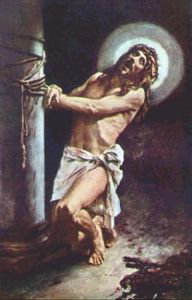
Jesus is made over to the soldiers to be scourged. They rudely strip Him of His garments, and tie Him to the pillar which is kept for this kind of torture. Fiercely do they strike Him; the Blood flows down His sacred Body. Let us adore this the second bloodshedding of our Jesus, whereby He expiates the sins we and the whole world have committed by the flesh. This scourging is by the hands of Gentiles: the Jews delivered Him up to be punished, and the Romans were the executioners: thus have we all had our share in the awful deicide.
At last the soldiers are tired; they loose their Victim; but it is not out of anything like pity. Their cruelty is going to rest, and their rest is derision. Jesus has been called King of the Jews: a king, say they, must have a crown! Accordingly, they make one for the Son of David! It is of thorns. They press it violently upon His head, and this is the third bloodshedding of Our Redeemer. Then, that they may make their scoffing perfect, the soldiers throw a scarlet cloak over His shoulders, and put a reed, for a sceptre, into His hand; and bending their knee before Him, they thus salute Him: ‘Hail, King of the Jews!’ This insulting homage is accompanied with blows upon His face; they spit upon Him; and, from time to time, take the reed from His hand, wherewith to strike the thorns deeper into His head.
Here, the Christian prostrates himself before his Saviour, and says to Him with a heart full of compassion and veneration: ‘Yes! my Jesus! Thou art King of the Jews! Thou art the Son of David, and therefore our Messias and our Redeemer! Israel, that hath so lately proclaimed Thee King, now unkings Thee; the Gentiles scoff at Thy royalty, making it a subject for keener insult; but reign Thou must, and over both Jews and Gentiles: over the Jews, by Thy justice, for they are soon to feel the sceptre of Thy revenge; over the Gentiles, by Thy mercy, for Thine apostles are soon to lead them to Thy feet. Receive, dearest King! our homage and submission! Reign now and for ever over our hearts, yea, over our whole being!’
Thus mangled and bleeding, holding the reed in His hand, and with the scarlet tatters on His shoulders, Jesus is led back to Pilate. It is just the sight that will soften the hearts of the people; at least, Pilate thinks so; and taking Him with him to a balcony of the palace, he shows Him to the crowd below, saying: ‘Behold the Man!’ [11] Little did Pilate know all that these few words conveyed! He says not: ‘Behold Jesus!’ nor, ‘Behold the King of the Jews!’ He says: ‘Behold the Man!’ Man—the Christian understands the full force of the word thus applied to our Redeemer. Adam, the first man, rebelled against God, and, by his sin, deranged the whole work of the Creator: as a punishment for his pride and intemperance, the flesh tyrannized over the spirit; the very earth was cursed, and thorns were to be its growth. Jesus, the new Man, comes into this world, bearing upon Him, not the reality, but the appearance, the likeness, of sin: in Him, the work of the Creator regains the primeval order; but the change was not wrought without violence. To teach us that the flesh must be brought into subjection to the spirit, Jesus’ Flesh was torn by the scourges; to teach us that pride must give way to humility, the only crown that Jesus wears is made of thorns. Yes, ‘Behold the Man!’ the triumph of the spirit over the flesh, the triumph of humility over pride.Like the tiger that grows fiercer as he sees blood, so is Israel at the sight of Jesus after His scourging. ‘Crucify Him! Crucify Him!’—The cry is still the same. ‘Take Him you,’ says Pilate, ‘and crucify Him; for I find no cause in Him.’ And yet, he has ordered Him to be scourged enough to cause His death! Here is another device of the base coward; but it, too, fails. The Jews have their answer ready; they put forward the right granted by the Romans to the nations that are tributary to the empire. ‘We have,’ say they, ‘a law, and according to the law He ought to die; because He made Himself the Son of God.’ Disconcerted by this reply, Pilate takes Jesus aside into the hall, and says to Him: ‘Whence art Thou?’ Jesus is silent; Pilate was not worthy to hear the answer to his question. This silence irritates him. ‘Speakest Thou not to me?’ says he. ‘Knowest Thou not, that I have power to crucify Thee, and I have power to release Thee?’ Here Jesus deigns to speak; and He speaks in order to teach us that every power of government, even where pagans are in question, comes from God, and not from a pretended social compact: ‘Thou shouldst not have any power against Me, unless it were given thee from above. Therefore, he that hath delivered Me to thee, hath the greater sin.’ [12]
This dignified reply produces an impression upon Pilate: he resolves to make another attempt to save Jesus. But the people vociferate a threat which alarms him: ‘If thou release this Man, thou art not Cæsar’s friend; for whosoever maketh himself a king, speaketh against Cæsar.’ Still, he is determined to try and pacify the crowd. He leaves the hall, sits upon the judgment-seat, orders Jesus to be placed near him, and thus pleads for Him: ‘Behold your King!’ as though he would say, ‘What have you or Cæsar to fear from such a pitiable object as this?’ The argument is unavailing, and only provokes the cry: ‘Away with Him! Away with Him! Crucify Him!’ As though he did not believe them to be in earnest, Pilate says to them: ‘Shall I crucify your King?’ This time the chief priests answer: ‘We have no king but Cæsar.’ [13] When the very ministers of God can talk thus, religion is at an end. No king but Cæsar! Then, the sceptre is taken from Juda, and Jerusalem is cast off, and the Messias is come!
Pilate, seeing that nothing can quell the tumult, and that his honour as governor is at stake, decides on making Jesus over to His enemies. Though against his own inclination, he passes the sentence, which is to cause him such remorse of conscience that he will afterwards seek relief in suicide. He takes a tablet, and with astyle writes the inscription which is to be fastened to the cross. The people demand that two thieves should be crucified at the same time; it would be an additional insult to Jesus: this, too, he grants, fulfilling the prophecy of Isaias: And with the wicked was He reputed. [14] Having thus defiled his soul with the most heinous of crimes, Pilate washes his hands before the people, and says to them: ‘I am innocent of the Blood of this just Man; look ye to it!’ They answer him with this terrible self-imprecation: ‘His Blood be upon us and upon our children!’ [15] The mark of parricide here fastens on this ungrateful and sacrilegious people; Cain-like, they shall wander fugitives on the earth. Eighteen hundred years have passed since then; slavery, misery, and contempt, have been their portion; but the mark is still upon them. Let us Gentiles—upon whom the Blood of Jesus has fallen as the dew of heaven’s mercy—return fervent thanks to the goodness of our heavenly Father, who hath so loved the world, as to give it His only-begotten Son. [16] Let us give thanks to the Son, who, seeing that our iniquities could not be blotted out save by His Blood, shed it, on this day, even to the very last drop.
Here commences ‘the way of the cross’: the house of Pilate, where our Jesus receives the sentence of death, is the first station. Our Redeemer is consigned, by the governor’s order, into the hands of the Jews. The soldiers seize Him, and drag Him from the court. They strip Him of the scarlet cloak and bid Him clothe Himself with His own garments as before the scourging. The cross is ready and they put it on His wounded shoulders. The place where the new Isaac loads Himself with the wood of His sacrifice, is the second station. To Calvary!—this is the word of command, and it is obeyed: soldiers, executioners, priests, scribes, people—these form the procession. Jesus moves slowly on; but after a few paces, exhausted by the loss of Blood and by His sufferings, He falls under the weight of His cross. It is the first fall, and marks the third station.He falls, not so much by the weight of His cross, as by that of our sins! The soldiers roughly lay their hands on Him, and force Him up again. Scarcely has He resumed His steps, than He is met by His afflicted Mother. The ‘valiant woman’, whose love is stronger than death, was not to be absent at such an hour as this. She must see her Son, follow Him, keep close to Him, even to His last breath. No tongue can tell the poignancy of her grief. The anxiety she has endured during the last few days has exhausted her strength. All the sufferings of Jesus have been made known to her by a divine revelation; she has shared each one of them with Him. But now she cannot endure to be absent, and makes her way through the crowd. The sacrifice is nigh its consummation; no human power could keep such a Mother from her Jesus. The faithful Magdalene is by her side, bathed in tears; John, Mary the mother of James the Less, and Salerno the mother of John, are also with her: they weep for their divine Master, she for her Son. Jesus sees her, but cannot comfort her, for all this is but the beginning of what He is to endure. Oh! what an additional suffering was this for His loving Heart, to see His Mother agonizing with sorrow! The executioners observe the Mother of their Victim, but it would be too much mercy in them to allow her to speak to Him; she may follow, if she please, with the crowd; it is more than she could have expected, to be allowed this meeting, which we venerate as the fourth station of the way of the cross.But from this to the last there is a long distance, for there is a law that all criminals are to be executed outside the city walls. The Jews are afraid of Jesus’ expiring before reaching the place of sacrifice. Just at this time, they behold a man coming from the country, by name Simon of Cyrene; they order him to help Jesus to carry His cross. It is out of a motive of cruelty to our Lord, but it gives Simon the honour of sharing with Him the fatigue of bearing the instrument of the world’s salvation. The spot where this happens is the fifth station.
A little farther on, an incident occurs which strikes the executioners themselves with astonishment. A woman makes her way through the crowd, and setting the soldiers at defiance, comes close up to Jesus. She holds her veil in her hands, and with it respect-fully wipes the face of our Lord, for it is covered with blood, sweat, and spittle. She loves Jesus, and cares not what may happen to her, so she can offer Him this slight comfort. Her love receives its reward: she finds her veil miraculously impressed with the likeness of Jesus’ Face. This courageous act of Veronica marks the sixth station of the way of the cross.Jesus grows weaker at each step: He falls a second time: it is the seventh station. Again do the soldiers violently raise Him up, and push Him along the road. It is easy to follow in His footsteps, for a streak of Blood shows where He has passed. A group of women is following close behind the soldiers; they heed not the insults heaped upon them; their compassion makes them brave. But the last brutal treatment’ shown to Jesus is more than they can bear in silence; they utter a cry of pitiful lamentation. Our Saviour is pleased with these women, who, in spite of the weakness of their sex, are showing more courage than all the men of Jerusalem put together. He affectionately turns towards them, and tells them what a terrible chastisement is to follow the crime they are now witnessing. The chief priests and scribes recognize the dignity of the Prophet that had so often spoken to them: they listen with indignation; and, at this the eighth station of the great way, they hear these words: ‘Daughters of Jerusalem! weep not over Me, but weep for yourselves and for your children. For behold the days shall come, wherein they will say: Blessed are the barren, and the wombs that have not borne, and the paps that have not given suck. Then shall they begin to say to the mountains: Fall upon us! And to the hills: Cover us!’ [17]
At last, they reach the foot of the hill. Calvary is steep; but it is the place of Jesus’ Sacrifice. He begins the ascent, but falls a third time: the hallowed spot is counted as the ninth station. A third time the soldiers force Jesus to rise and continue His painful journey to the summit of the hill, which is to serve as the altar for the holocaust that is to surpass all others in holiness and power. The executioners seize the cross and lay it upon the ground, preparatory to nailing the divine Victim to it. According to a custom practised both by the Romans and the Jews, a cup containing wine and myrrh is offered to Jesus. This drink, which had the bitterness of gall, was given as a narcotic, in order to deaden, in some degree, the feeling of the criminal, and lessen his pain. Jesus raises to His lips the cup, which is proffered Him rather from custom than from any idea of kindness; but He drinks not its contents, for He wishes to feel the full intensity of the suffering He accepts for our sake. Then the executioners, having violently stripped Him of His garments, which had fastened to His wounds, lead Him to the cross. The place where He was thus stripped of His garments, and where the cup of bitter drink was presented to Him, is venerated as the tenth station of the way of the cross. The first nine, from Pilate’s hall to the foot of Calvary, are still to be seen in the streets of Jerusalem; but the tenth and the remaining four are in the interior of the church of Holy Sepulchre, whose spacious walls enclose the spot where the last mysteries of the Passion were accomplished.
But we must here interrupt our history: we have already anticipated the hours of this great Friday, and we shall have to return, later on, to the hill of Calvary. It is time to assist at the service of our holy mother the Church, in which she celebrates the Death of her divine Spouse. We must not wait for the usual summons of the bells; they are silent; we must listen to the call of our faith and devotion. Let us, then, repair to the house of God.References:
1. St. Matt. xxvi. 63
2. Ibid. 64.—St. Mark xiv. 62.
3. St. Matt. xxvi. 65, 66.
4. St. Luke xxii. 64.
5. Gen. xlix. 10.
6. St. John xviii. 29-31.
7. Ibid.33, 36, 37, 38
8. St. Matt. xxvii. 13.
9. St. Luke xxiii. 5.
10. St. Matt. xxvii.—St. Luke xxiii.—St. John xviii.
11. St. John xix. 5.
12. St. John xix.
13. Ibid.
14. Is liii. 12.
15. St. Matt. xxvii. 24, 25.
16. St. John iii. 16
17. St. Luke xxiii. 28-30.
Showing posts with label Holy Week. Show all posts
Showing posts with label Holy Week. Show all posts
Friday, April 3, 2015
Good Friday
From The Liturgical Year by Abbot Dom Guéranger, O.S.B.

Monday, March 30, 2015
Palm Sunday
From The Liturgical Year by Abbot Dom Guéranger, O.S.B.
EARLY in the morning of this day, Jesus sets out for Jerusalem, leaving Mary His Mother, and the two sisters Martha and Mary Magdalene, and Lazarus, at Bethania. The Mother of sorrows trembles at seeing her Son thus expose Himself to danger, for His enemies are bent upon His destruction; but it is not death, it is triumph, that Jesus is to receive today in Jerusalem. The Messias, before being nailed to the cross, is to be proclaimed King by the people of the great city; the little children are to make her streets echo with their Hosanna to the Son of David; and this in presence of the soldiers of Rome's emperor, and of the high priests and pharisees: the first standing under the banner of their eagles; the second, dumb with rage.
The prophet Zachary had foretold this triumph which the Son of Man was to receive a few days before His Passion, and which had been prepared for Him from all eternity. ' Rejoice greatly, O daughter of Sion! Shout for joy, O daughter of Jerusalem! Behold thy King will come to thee; the Just and the Saviour. He is poor, and riding upon an ass, and upon a colt, the foal of an ass.' [Zach. ix. 9.] Jesus, knowing that the hour has come for the fulfilment of this prophecy, singles out two from the rest of His disciples, and bids them lead to Him an ass and her colt, which they would find not far off. He has reached Bethphage, on Mount Olivet. The two disciples lose no time in executing the order given them by their divine Master; and the ass and the colt are soon brought to the place where He stands.
The holy fathers have explained to us the mystery of these two animals. The ass represents the Jewish people, which had been long under the yoke of the Law; the colt, upon which, as the evangelist says, no man yet hath sat, [St. Mark xi. 2.] is a figure of the Gentile world, which no one had ever yet brought into subjection. The future of these two peoples is to be decided a few days hence: the Jews will be rejected, for having refused to acknowledge Jesus as the Messias; the Gentiles will take their place, to be adopted as God's people, and become docile and faithful.
The disciples spread their garments upon the colt; and our Saviour, that the prophetic figure might be fulfilled, sits upon him, [Ibid. 7, and St. Luke xix. 35.] and advances towards Jerusalem. As soon as it is known that Jesus is near the city, the Holy Spirit works in the hearts of those Jews, who have come from all parts to celebrate the feast of the Passover. They go out to meet our Lord, holding palm branches in their hands, and loudly proclaiming Him to be King. [St. Luke xix. 38.] They that have accompanied Jesus from Bethania, join the enthusiastic crowd. Whilst some spread their garments on the way, others cut down boughs from the palm-trees, and strew them along the road. Hosanna is the triumphant cry, proclaiming to the whole city that Jesus, the Son of David, has made His entrance as her King.
Thus did God, in His power over men's hearts, procure a triumph for His Son, and in the very city which, a few days later, was to clamour for His Blood. This day was one of glory to our Jesus, and the holy Church would have us renew, each year, the memory of this triumph of the Man-God. Shortly after the birth of our Emmanuel, we saw the Magi coming from the extreme east, and looking in Jerusalem for the King of the Jews, to whom they intended offering their gifts and their adorations: but it is Jerusalem herself that now goes forth to meet this King. Each of these events is an acknowledgment of the kingship of Jesus; the first, from the Gentiles; the second, from the Jews. Both were to pay Him this regal homage, before He suffered His Passion. The inscription to be put upon the cross, by Pilate's order, will express the kingly character of the Crucified: Jesus of Nazareth, King of the Jews. Pilate, the Roman governor, the pagan, the base coward, has been unwittingly the fulfiller of a prophecy; and when the enemies of Jesus insist on the inscription being altered, Pilate will not deign to give them any answer but this: ' What I have written, I have written.' Today, it is the Jews themselves that proclaim Jesus to be their King: they will soon be dispersed, in punishment for their revolt against the Son of David; but Jesus is King, and will be so for ever. Thus were literally verified the words spoken by the Archangel to Mary, when he announced to her the glories of the Child that was to be born of her: ' The Lord God shall give unto Him the throne of David, His father; and He shall reign in the house of Jacob for ever.' [St. Luke i. 32.] Jesus begins His reign upon the earth this very day; and though the first Israel is soon to disclaim His rule, a new Israel, formed from the faithful few of the old, shall rise up in every nation of the earth, and become the kingdom of Christ, a kingdom such as no mere earthly monarch ever coveted in his wildest fancies of ambition.
This is the glorious mystery which ushers in the great week, the week of dolours. Holy Church would have us give this momentary consolation to our heart, and hail our Jesus as our King. She has so arranged the service of today, that it should express both joy and sorrow; joy, by uniting herself with the loyal hosannas of the city of David; and sorrow, by compassionating the Passion of her divine Spouse. The whole function is divided into three parts, which we will now proceed to explain.
The first is the blessing of the palms; and we may have an idea of its importance from the solemnity used by the Church in this sacred rite. One would suppose that the holy Sacrifice has begun, and is going to be offered up in honour of Jesus' entry into Jerusalem. Introit, Collect, Epistle, Gradual, Gospel, even a Preface, are said, as though we were, as usual, preparing for the immolation of the spotless Lamb; but, after the triple Sanctus! Sanctus! Sanctus! the Church suspends these sacrificial formulas, and turns to the blessing of the palms. The prayers she uses for this blessing are eloquent and full of instruction; and, together with the sprinkling with holy water and the incensation, impart a virtue to these branches, which elevates them to the supernatural order, and makes them means for the sanctification of our souls and the protection of our persons and dwellings. The faithful should hold these palms in their hands during the procession, and during the reading of the Passion at Mass, and keep them in their homes as an outward expression of their faith, and as a pledge of God's watchful love.
It is scarcely necessary to tell our reader that the palms or olive branches, thus blessed, are carried in memory of those wherewith the people of Jerusalem strewed the road, as our Saviour made His triumphant entry; but a word on the antiquity of our ceremony will not be superfluous. It began very early in the east. It is probable that, as far as Jerusalem itself is concerned, the custom was established immediately after the ages of persecution. St. Cyril, who was bishop of that city in the fourth century, tells us that the palm-tree, from which the people cut the branches when they went out to meet our Saviour, was still to be seen in the vale of Cedron. [Cateches. x. versus fin.] Such a circumstance would naturally suggest an annual commemoration of the great event. In the following century, we find this ceremony established, not only in the churches of the east, but also in the monasteries of Egypt and Syria. At the beginning of Lent, many of the holy monks obtained permission from their abbots to retire into the desert, that they might spend the sacred season in strict seclusion; but they were obliged to return to their monasteries for Palm Sunday, as we learn from the life of Saint Euthymius, written by his disciple Cyril. [Act. SS. Jan. 20.] In the west, the introduction of this ceremony was more gradual; the first trace we find of it is in the sacramentary of St. Gregory, that is, at the end of the sixth, or the beginning of the seventh, century. When the faith had penetrated into the north, it was not possible to have palms or olive branches; they were supplied by branches from other trees. The beautiful prayers used in the blessing, and based on the mysteries expressed by the palm and olive trees, are still employed in the blessing of our willow, box, or other branches; and rightly, for these represent the symbolical ones which nature has denied us.
The second of today's ceremonies is the procession, which comes immediately after the blessing of the palms. It represents our Saviour's journey to Jerusalem, and His entry into the city. To make it the more expressive, the branches that have just been blessed are held in the hand during it. With the Jews, to hold a branch in one's hand was a sign of joy. The divine law had sanctioned this practice, as we read in the following passage from Leviticus, where God commands His people to keep the feast of tabernacles: And you shall take to you, on the first day, the fruits of the fairest tree, and branches of palm-trees, and boughs of thick trees, and willows of the brook, and you shall rejoice before the Lord your God. [Lev. xxiii. 40.] It was, therefore, to testify their delight at seeing Jesus enter within their walls, that the inhabitants, even the little children, of Jerusalem, went forth to meet Him with palms in their hands. Let us, also, go before our King, singing our hosannas to Him as the conqueror of death, and the liberator of His people.
During the middle ages, it was the custom, in many churches, to carry the book of the holy Gospels in this procession. The Gospel contains the words of Jesus Christ, and was considered to represent Him. The procession halted at an appointed place, or station: the deacon then opened the sacred volume, and sang from it the passage which describes our Lord's entry into Jerusalem. This done, the cross which, up to this moment, was veiled, was uncovered; each of the clergy advanced towards it, venerated it, and placed at its foot a small portion of the palm he held in his hand. The procession then returned, preceded by the cross, which was left unveiled until all had re-entered the church. In England and Normandy, as far back as the eleventh century, there was practised a holy ceremony which represented, even more vividly than the one we have just been describing, the scene that was witnessed on this day at Jerusalem: the blessed Sacrament was carried in procession. The heresy of Berengarius, against the real presence of Jesus in the Eucharist, had been broached about that time; and the tribute of triumphant joy here shown to the sacred Host was a distant preparation for the feast and procession which were to be instituted at a later period.
A touching ceremony was also practised in Jerusalem during today's procession, and, like those just mentioned, was intended to commemorate the event related by the Gospel. The whole community of the Franciscans (to whose keeping the holy places are entrusted) went in the morning to Bethphage. There, the father guardian of the holy Land, being vested in pontifical robes, mounted upon an ass, on which garments were laid. Accompanied by the friars and the Catholics of Jerusalem, all holding palms in their hands, he entered the city, and alighted at the church of the holy sepulchre where Mass was celebrated with all possible solemnity.
This beautiful ceremony, which dated from the period of the Latin kingdom in Jerusalem, has been forbidden for now almost two hundred years, by the Turkish authorities of the city.
We have mentioned these different usages, as we have done others on similar occasions, in order to aid the faithful to the better understanding of the several mysteries of the liturgy. In the present instance, they will learn that, in to-day's procession, the Church wishes us to honour Jesus Christ as though He were really among us, and were receiving the humble tribute of our loyalty. Let us lovingly go forth to meet this our King, our Saviour, who comes to visit the daughter of Sion, as the prophet has just told us. He is in our midst; it is to Him that we pay honour with our palms: let us give Him our hearts too. He comes that He may be our King; let us welcome Him as such, and fervently cry out to Him: 'Hosanna to the Son of David!'
At the close of the procession a ceremony takes place, which is full of the sublimest symbolism. On returning to the church, the doors are found to be shut. The triumphant procession is stopped; but the songs of joy are continued. A hymn in honour of Christ our King is sung with its joyous chorus; and at length the subdeacon strikes the door with the staff of the cross; the door opens, and the people, preceded by the clergy, enter the church, proclaiming the praise of Him, who is our resurrection and our life.
This ceremony is intended to represent the entry of Jesus into that Jerusalem of which the earthly one was but the figure--the Jerusalem of heaven, which has been opened for us by our Saviour. The sin of our first parents had shut it against us; but Jesus, the King of glory, opened its gates by His cross, to which every resistance yields. Let us, then, continue to follow in the footsteps of the Son of David, for He is also the Son of God, and He invites us to share His kingdom with Him. Thus, by the procession, which is commemorative of what happened on this day, the Church raises up our thoughts to the glorious mystery of the Ascension, whereby heaven was made the close of Jesus' mission on earth. Alas! the interval between these two triumphs of our Redeemer are not all days of joy; and no sooner is our procession over, than the Church, who had laid aside for a moment the weight of her grief, falls back into sorrow and mourning.
The third part of today's service is the offering of the holy Sacrifice. The portions that are sung by the choir are expressive of the deepest desolation; and the history of our Lord's Passion, which is now to be read by anticipation, gives to the rest of the day that character of sacred gloom, which we all know so well. For the last five or six centuries, the Church has adopted a special chant for this narrative of the holy Gospel. The historian, or the evangelist, relates the events in a tone that is at once grave and pathetic; the words of our Saviour are sung to a solemn yet sweet melody, which strikingly contrasts with the high dominant of the several other interlocutors and the Jewish populace. During the singing of the Passion, the faithful should hold their palms in their hands, and, by this emblem of triumph, protest against the insults offered to Jesus by His enemies. As we listen to each humiliation and suffering, all of which were endured out of love for us, let us offer Him our palm as to our dearest Lord and King. When should we be more adoring, than when He is most suffering?
These are the leading features of this great day. According to our usual plan, we will add to the prayers and lessons any instructions that seem to be needed.
This Sunday, besides its liturgical and popular appellation of Palm Sunday, has had several other names. Thus it was called Hosanna Sunday, in allusion to the acclamation wherewith the Jews greeted Jesus on His entry into Jerusalem. Our forefathers used also to call it Pascha Floridum, because the feast of the Pasch (or Easter), which is but eight days off, is today in bud, so to speak, and the faithful could begin from this Sunday to fulfil the precept of Easter Communion. It was in allusion to this name, that the Spaniards, having on the Palm Sunday of 1513, discovered the peninsula on the Gulf of Mexico, called it Florida. We also find the name of Capitilavium given to this Sunday, because, during those times when it was the custom to defer till Holy Saturday the baptism of infants born during the preceding months (where such a delay entailed no danger), the parents used, on this day, to wash the heads of these children, out of respect to the holy chrism wherewith they were to be anointed. Later on, this Sunday was, at least in some churches, called the Pasch of the competents, that is, of the catechumens, who were admitted to Baptism; they assembled today in the church, and received a special instruction on the symbol, which had been given to them in the previous scrutiny. In the Gothic Church of Spain, the symbol was not given till today. The Greeks call this Sunday Baïphoros, that is, Palm-bearing.
Friday, April 18, 2014


Holy Thursday and the Washing of the Feet
A meditation on Lent from The Liturgical Year by Abbot Dom Guéranger, O.S.B.
After having, on this day, washed the feet of His disciples, Jesus said to them: 'Know ye what I have done to you? You call Me Master and Lord: and You say well, for so I am. If then I, being your Lord and Master, have washed your feet; you, also, ought to wash one another's feet. For I have given you an example, that as I have done to you, so you do also.'[1] Although the meaning of these words is that, after the example of our divine Master, we should practice works of fraternal charity towards our neighbour, yet the literal imitation of this our Saviour's act has always been observed in the Church.
At the commencement, it was almost a daily practice. St. Paul, when mentioning the qualities which should adorn the Christian widow, includes that of washing the feet of the saints,[2] that is, of the faithful. We find this act of humble charity practised in the ages of persecution, and even later. TheActs of the saints of the first six centuries, and the homilies and writings of the holy fathers, are filled with allusions to it. Afterwards, charity grew cold, and this particular way of exercising it was confined, almost exclusively, to monasteries. Still, from time to time it was practiced elsewhere. We occasionally find kings and queens setting this example of humility. The holy king Robert of France, and, later, Saint Louis, used frequently to wash the feet of the poor. The holy queen St. Margaret of Scotland, and Saint Elizabeth of Hungary, did the same. The Church, with that spirit which makes her treasure up every recommendation of her divine Lord, has introduced this act of humility into her liturgy, and it is today that she puts the great lesson before her children. In every church of any importance, the prelate, or superior, honours our Saviour's condescension, by the ceremony called the washing of the feet. The bishops throughout the world follow the example set them by the sovereign Pontiff, who performs this ceremony in the Vatican. Yea, there are still to be found kings and queens who, on this day, wash the feet of the poor, and give them abundant alms.
The twelve apostles are represented by the twelve poor who, according to the most general practice, are chosen for this ceremony. The Pope, however, washes the feet of thirteen priests of as many different countries; and this is the reason of the ceremonial requiring this number for cathedral churches. But, why thirteen? Some have interpreted it thus: that it represented the full number of the apostolic college, which is thirteen; for St. Mathias was elected in Judas's place, and our Lord Himself, after His Ascension, called St. Paul to be an apostle. Other authors, however, and among them the learned Pope Benedict XIV,[3] assert that the reason of this number being chosen was the miracle related in the life of St. Gregory the Great. This holy Pope used, every day, to wash the feet of twelve poor men, whom he afterwards invited to his own table. One day, a thirteenth was present: it was an angel, whom God had sent, that He might thereby testify how dear to Him was the charity of His servant.
The ceremony of the washing of the feet is also called the Mandatum, from the first word of the first antiphon. After the deacon has chanted the Gospel of the Mass of Maundy Thursday, the celebrant takes off the cope, girds himself with a towel, and, kneeling down, begins to wash the feet of those who have been chosen. He kisses the right foot of each one after having washed it.
ENDNOTES
1. 1 St. John xiii. 12-15.
2 1 Tim. v. 10.
3 De Festis D. N.J. C. lib. I. cap. vi. no. 57.
Thursday, April 17, 2014

Friday, April 6, 2012
Meditations for Good Friday
From The Liturgical Year by Abbot Dom Guéranger, O.S.B.
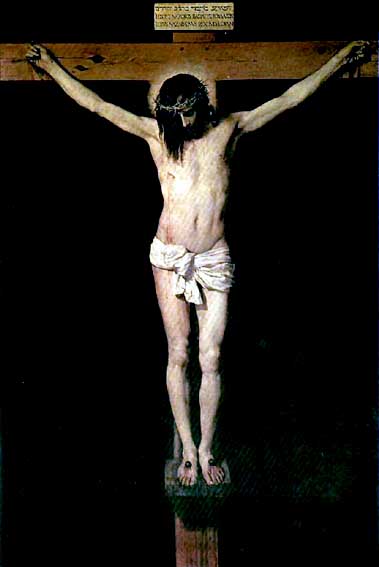 THE MORNING: The sun has risen upon Jerusalem. But the
priests and scribes have not waited all this time without venting their rage
upon Jesus. Annas, who was the first to receive the divine Captive, has had Him
taken to his son-in-law Caiphas, the high priest. Here He is put through a
series of insulting questions, which disdaining to answer, He receives a blow
from one of the high priest’s servants. False witnesses had already been
prepared: they now come forward, and depose their lies against Him who is the
very Truth: but their testimony is contradictory. Then Caiphas, seeing that this
plan for convicting Jesus of blasphemy is only serving to expose his
accomplices, turns to another. He asks Him a question, which will oblige our
Lord to make an answer; and in this answer he, Caiphas, will discover blasphemy,
and blasphemy will bring Jesus under the power of the Synagogue. This is the
question: ‘I adjure Thee, by the living God, that Thou tell us, if Thou be the
Christ the Son of God! [1] Our Saviour, in order to teach us that we
should show respect to those who are in authority, breaks the silence He has
hitherto observed, and answers: Thou hast said it: I am: and hereafter ye shall
see the Son of Man sitting on the right hand of the power of God, and coming in
the clouds of heaven.’ [2] Hereupon, the impious pontiff rises, rends his
garments, and exclaims: ‘He hath blasphemed! What further need have we of
witnesses? Behold! now ye have heard the blasphemy: what think ye?’ The whole
place resounds with the cry: ‘He is guilty of death!’ [3]
THE MORNING: The sun has risen upon Jerusalem. But the
priests and scribes have not waited all this time without venting their rage
upon Jesus. Annas, who was the first to receive the divine Captive, has had Him
taken to his son-in-law Caiphas, the high priest. Here He is put through a
series of insulting questions, which disdaining to answer, He receives a blow
from one of the high priest’s servants. False witnesses had already been
prepared: they now come forward, and depose their lies against Him who is the
very Truth: but their testimony is contradictory. Then Caiphas, seeing that this
plan for convicting Jesus of blasphemy is only serving to expose his
accomplices, turns to another. He asks Him a question, which will oblige our
Lord to make an answer; and in this answer he, Caiphas, will discover blasphemy,
and blasphemy will bring Jesus under the power of the Synagogue. This is the
question: ‘I adjure Thee, by the living God, that Thou tell us, if Thou be the
Christ the Son of God! [1] Our Saviour, in order to teach us that we
should show respect to those who are in authority, breaks the silence He has
hitherto observed, and answers: Thou hast said it: I am: and hereafter ye shall
see the Son of Man sitting on the right hand of the power of God, and coming in
the clouds of heaven.’ [2] Hereupon, the impious pontiff rises, rends his
garments, and exclaims: ‘He hath blasphemed! What further need have we of
witnesses? Behold! now ye have heard the blasphemy: what think ye?’ The whole
place resounds with the cry: ‘He is guilty of death!’ [3]
The Son of God has come down upon the earth in order
to restore man to life; and yet, here we have this creature of death daring to
summon his divine Benefactor before a human tribunal, and condemning Him to
death! And Jesus is silent, and bears with these presumptuous, these ungrateful,
blasphemers! Well may we exclaim, in the words wherewith the Greek Church
frequently interrupts to-day’s reading of the Passion: ‘Glory be to thy
patience, O Lord!’
Scarcely have the terrible words, ‘He is guilty of death,’ been
uttered, than the servants of the high priest rush upon Jesus. They spit upon
Him, and blindfolding Him, they strike Him, saying: ‘Prophesy, who is it that
struck Thee?’ [4]
Thus does the
Synagogue treat the Messias, who, they say, is to be their glory! And yet, these
outrages, frightful as they are, are but the beginning of what our Redeemer has
to go through.
But there is something far more trying than all this
to the heart of Jesus, and it is happening at this very time. Peter has made his
way as far as the court of the high priest’s palace. He is recognized by the
bystanders as a Galilean, and one of Jesus’ disciples. The apostle trembles for
his life; he denies his Master, and affirms with an oath that he does not even
know Him. What a sad example is here of the punishment of presumption! But Jesus
has mercy on His apostle. The servants of the high priest lead Him near to the
place where Peter is standing; He casts upon him a look of reproach and pardon;
Peter immediately goes forth, and weeps bitterly. From this hour forward he can
do nothing but lament his sin; and it is only on Easter morning, when Jesus
shall appear to him after His Resurrection, that he will admit any consolation
to his afflicted heart. Let us make him our model, now that we are spending
these hours, with our holy mother the Church, in contemplating the Passion of
Jesus. Peter withdraws, because he fears his own weakness; let us remain to the
end, for what have we to fear? May our Jesus give us one of those looks, which
can change the hardest and worst of hearts!
Meanwhile, the day-dawn breaks upon the city, and the chief
priests make arrangements for taking Jesus before the Roman governor. They
themselves have found Him guilty; they have condemned Him as a blasphemer, and
according to the Law of Moses a blasphemer must be stoned to death. But they
cannot apply the law: Jerusalem is no longer free, or governed by her own laws.
The power over life and death may be exercised only by her conquerors, and that
in the name of Cæsar. How is it that these priests and scribes can go through
all this, and never once remember the prophecy of Jacob, that the Messias would
come when the sceptre should be taken away from Juda? [5]
They know off by
heart, they are the appointed guardians of, those prophecies, which describe the
death to which this Messias is to be put; and yet, they are the very ones who
bring it about! How is all this? They are blind, and it is jealousy that blinds
them. The rumour of Jesus’ having been seized during the night, and that He is on the point of being led before the Roman governor, rapidly spreads through the city, and reaches Judas’ ears. This wretched man had a passion for money, but there was nothing to make him desire the death of his divine Master. He knew Jesus’ supernatural power. He perhaps flattered himself that He, who could command nature and the elements, would easily escape from the hands of His enemies. But now when he sees that He does not escape, and that He is to be condemned to death, he runs to the temple, and gives back the thirty pieces of silver to the chief priests. Is it that he is converted, and is about to ask his Master to pardon him? Alas, no! Despair has possession of him, and he puts an end to his existence. The recollection of all the merciful solicitations made to him, yesterday, by Jesus, both during the last Supper, and in the garden, gives him no confidence; it only serves to increase is despair. Surely, he well knew what a merciful Saviour he had to deal with! And yet, he despairs, and this at the very time when the Blood, which washes away the sins of the whole world, is about to be shed! He is lost, because he despaired.
The chief priests, taking Jesus with them, present themselves at
the governor’s palace, demanding audience for a case of importance. Pilate comes
forward, and peevishly asks them: ‘What accusation bring ye against this Man?’
They answer: ‘If He were not a malefactor, we would not have delivered Him up to
thee.’ It is very evident, from these first words, that Pilate has a contempt
for these Jewish priests; it is not less evident that they are determined to
gain their cause. ‘Take Him you,’ says Pilate, ‘and judge Him according to your
Law.’ The chief priests answer: ‘It is not lawful for us to put any man to
death.’ [6]
Pilate leaves the hall, in order to speak with these men. He
returns, and commands Jesus to be brought in. The Son of God and the
representative of the pagan world are face to face. Pilate begins by asking Him:
‘Art Thou the King of the Jews?’ To this Jesus thus replies: ‘My kingdom is not
of this world. If My kingdom were of this world, My servants would certainly
strive that I should not be delivered to the Jews. But now My kingdom is not
from hence’. ‘Art Thou a King, then?’ says Pilate. ‘Thou sayest,’ answers Jesus,
‘that I am a King.’ Having, by these last words, confessed His august dignity,
our Lord offers a grace to this Roman; He tells him that there is something
worthier of man’s ambition than earthly honours. ‘For this,’ says Jesus, ‘was I
born, and for this came I into the world; that I should give testimony to the
truth. Every one that is of the truth heareth My voice.’ ‘What is truth?’ asks
Pilate; but without waiting for the answer, he leaves Jesus, for he is anxious
to have done with this case. He returns to the Jews, and says to them: ‘I find
no cause in Him.’ [7]
Pilate fancies that this Jesus must be a
leader of some Jewish sect, whose teachings give offence to the chief priests,
but which are not worth his examining into them: yet at the same time, he is
convinced that He is a harmless Man, and that it would be foolish and unjust to
accuse Him of disturbing the state. Scarcely has Pilate expressed his opinion in
favour of Jesus, than a long list of accusations is brought up against Him by
the chief priests. Pilate is astonished at Jesus’ making no reply, and says to
Him: ‘Dost Thou not hear how great testimonies they allege against Thee?’ [8]
These words are kindly meant, but Jesus
still remains silent: they, however, excite His enemies to fresh fury, and they
cry out: ‘He stirreth up the people, teaching throughout all Judea, beginning
from Galilee, even to this place.’ [9]
This word Galilee
suggests a new idea to Pilate. Herod, the tetrarch of Galilee, happens to be in
Jerusalem at this very time. Jesus is his subject; He must be sent to him. Thus
Pilate will get rid of a troublesome case, and this act of courteous deference
will re-establish a good understanding between himself and Herod. The Saviour is therefore dragged through the streets of Jerusalem, from Pilate’s house to Herod’s palace. His enemies follow Him with relentless fury; but Jesus still observes His noble silence. Herod, the murderer of John the Baptist, insults Him, and ordering Him to be clothed in a white garment, as a fool, he sends Him back to Pilate. Another plan for ridding himself of this troublesome case now strikes the Roman governor. At the feast of the Pasch, he had the power of granting pardon to any one criminal the people may select. They are assembled together at the court-gates. He feels sure that their choice will fall upon Jesus, for it is but a few days ago that they led Him in triumph through the city: besides, he intends to make the alternative one who is an object of execration to the whole people; he is a murderer, and his name Barabbas. ‘Whom will you that I release to you?’ says Pilate: ‘Barabbas, or Jesus, that is called the Christ?’ He has not long to wait for the answer: the crowd exclaim: ‘Not this man, but Barabbas!’ ‘What then,’ replies Pilate, ‘shall I do with Jesus, that is called the Christ?’ ‘Crucify Him.’ ‘Why, what evil hath He done? I will chastise Him, therefore, and let Him go.’ But they, growing irritated at this, cry out so much the louder: ‘Crucify Him! Crucify Him!’ [10]
Pilate’s cowardly subterfuge has failed, and left
him in a more difficult position than he was before. His putting the innocent on
a level with a murderer was in itself a gross injustice; and yet, he has not
gone far enough for a people that is blind with passion. Neither does his
promise to chastise Jesus satisfy them: they want more than His Blood; they
insist on His death.
 Here
let us pause, and offer our Saviour a reparation for the insult He here
receives. He is put in competition with a murderer, and the murderer is
preferred! Pilate makes an attempt to save Jesus: but on what terms! He must be
put on a footing with a vile wretch, and even so be worsted! Those very lips
that, a few days back, sang ‘Hosannah to the Son of David,’ now clamour for His
crucifixion! The city magistrate and governor pronounces Him innocent, and yet
condemns Him to be scourged, because he fears a disturbance!
Here
let us pause, and offer our Saviour a reparation for the insult He here
receives. He is put in competition with a murderer, and the murderer is
preferred! Pilate makes an attempt to save Jesus: but on what terms! He must be
put on a footing with a vile wretch, and even so be worsted! Those very lips
that, a few days back, sang ‘Hosannah to the Son of David,’ now clamour for His
crucifixion! The city magistrate and governor pronounces Him innocent, and yet
condemns Him to be scourged, because he fears a disturbance! Jesus is made over to the soldiers to be scourged. They rudely strip Him of His garments, and tie Him to the pillar which is kept for this kind of torture. Fiercely do they strike Him; the Blood flows down His sacred Body. Let us adore this the second bloodshedding of our Jesus, whereby He expiates the sins we and the whole world have committed by the flesh. This scourging is by the hands of Gentiles: the Jews delivered Him up to be punished, and the Romans were the executioners: thus have we all had our share in the awful deicide.
At last the soldiers are tired; they loose their Victim; but it is not out of anything like pity. Their cruelty is going to rest, and their rest is derision. Jesus has been called King of the Jews: a king, say they, must have a crown! Accordingly, they make one for the Son of David! It is of thorns. They press it violently upon His head, and this is the third bloodshedding of Our Redeemer. Then, that they may make their scoffing perfect, the soldiers throw a scarlet cloak over His shoulders, and put a reed, for a sceptre, into His hand; and bending their knee before Him, they thus salute Him: ‘Hail, King of the Jews!’ This insulting homage is accompanied with blows upon His face; they spit upon Him; and, from time to time, take the reed from His hand, wherewith to strike the thorns deeper into His head.
Here, the Christian prostrates himself before his Saviour, and says to Him with a heart full of compassion and veneration: ‘Yes! my Jesus! Thou art King of the Jews! Thou art the Son of David, and therefore our Messias and our Redeemer! Israel, that hath so lately proclaimed Thee King, now unkings Thee; the Gentiles scoff at Thy royalty, making it a subject for keener insult; but reign Thou must, and over both Jews and Gentiles: over the Jews, by Thy justice, for they are soon to feel the sceptre of Thy revenge; over the Gentiles, by Thy mercy, for Thine apostles are soon to lead them to Thy feet. Receive, dearest King! our homage and submission! Reign now and for ever over our hearts, yea, over our whole being!’
Thus mangled and bleeding, holding the reed in His hand, and with
the scarlet tatters on His shoulders, Jesus is led back to Pilate. It is just
the sight that will soften the hearts of the people; at least, Pilate thinks so;
and taking Him with him to a balcony of the palace, he shows Him to the crowd
below, saying: ‘Behold the Man!’ [11]
Little did Pilate
know all that these few words conveyed! He says not: ‘Behold Jesus!’ nor,
‘Behold the King of the Jews!’ He says: ‘Behold the Man!’ Man—the Christian
understands the full force of the word thus applied to our Redeemer. Adam, the
first man, rebelled against God, and, by his sin, deranged the whole work of the
Creator: as a punishment for his pride and intemperance, the flesh tyrannized
over the spirit; the very earth was cursed, and thorns were to be its growth.
Jesus, the new Man, comes into this world, bearing upon Him, not the reality,
but the appearance, the likeness, of sin: in Him, the work of the Creator
regains the primeval order; but the change was not wrought without violence. To
teach us that the flesh must be brought into subjection to the spirit, Jesus’
Flesh was torn by the scourges; to teach us that pride must give way to
humility, the only crown that Jesus wears is made of thorns. Yes, ‘Behold the
Man!’ the triumph of the spirit over the flesh, the triumph of humility over
pride.
 Like
the tiger that grows fiercer as he sees blood, so is Israel at the sight of
Jesus after His scourging. ‘Crucify Him! Crucify Him!’—The cry is still the
same. ‘Take Him you,’ says Pilate, ‘and crucify Him; for I find no cause in
Him.’ And yet, he has ordered Him to be scourged enough to cause His death! Here
is another device of the base coward; but it, too, fails. The Jews have their
answer ready; they put forward the right granted by the Romans to the nations
that are tributary to the empire. ‘We have,’ say they, ‘a law, and according to
the law He ought to die; because He made Himself the Son of God.’ Disconcerted
by this reply, Pilate takes Jesus aside into the hall, and says to Him: ‘Whence
art Thou?’ Jesus is silent; Pilate was not worthy to hear the answer to his
question. This silence irritates him. ‘Speakest Thou not to me?’ says he.
‘Knowest Thou not, that I have power to crucify Thee, and I have power to
release Thee?’ Here Jesus deigns to speak; and He speaks in order to teach us
that every power of government, even where pagans are in question, comes from
God, and not from a pretended social compact: ‘Thou shouldst not have any power
against Me, unless it were given thee from above. Therefore, he that hath
delivered Me to thee, hath the greater sin.’ [12]
Like
the tiger that grows fiercer as he sees blood, so is Israel at the sight of
Jesus after His scourging. ‘Crucify Him! Crucify Him!’—The cry is still the
same. ‘Take Him you,’ says Pilate, ‘and crucify Him; for I find no cause in
Him.’ And yet, he has ordered Him to be scourged enough to cause His death! Here
is another device of the base coward; but it, too, fails. The Jews have their
answer ready; they put forward the right granted by the Romans to the nations
that are tributary to the empire. ‘We have,’ say they, ‘a law, and according to
the law He ought to die; because He made Himself the Son of God.’ Disconcerted
by this reply, Pilate takes Jesus aside into the hall, and says to Him: ‘Whence
art Thou?’ Jesus is silent; Pilate was not worthy to hear the answer to his
question. This silence irritates him. ‘Speakest Thou not to me?’ says he.
‘Knowest Thou not, that I have power to crucify Thee, and I have power to
release Thee?’ Here Jesus deigns to speak; and He speaks in order to teach us
that every power of government, even where pagans are in question, comes from
God, and not from a pretended social compact: ‘Thou shouldst not have any power
against Me, unless it were given thee from above. Therefore, he that hath
delivered Me to thee, hath the greater sin.’ [12]
This dignified reply produces an impression upon Pilate: he resolves to make another attempt to save Jesus. But the people vociferate a threat which alarms him: ‘If thou release this Man, thou art not Cæsar’s friend; for whosoever maketh himself a king, speaketh against Cæsar.’ Still, he is determined to try and pacify the crowd. He leaves the hall, sits upon the judgment-seat, orders Jesus to be placed near him, and thus pleads for Him: ‘Behold your King!’ as though he would say, ‘What have you or Cæsar to fear from such a pitiable object as this?’ The argument is unavailing, and only provokes the cry: ‘Away with Him! Away with Him! Crucify Him!’ As though he did not believe them to be in earnest, Pilate says to them: ‘Shall I crucify your King?’ This time the chief priests answer: ‘We have no king but Cæsar.’ [13] When the very ministers of God can talk thus, religion is at an end. No king but Cæsar! Then, the sceptre is taken from Juda, and Jerusalem is cast off, and the Messias is come!

Here commences ‘the way of the cross’: the house of
Pilate, where our Jesus receives the sentence of death, is the first station.
Our Redeemer is consigned, by the governor’s order, into the hands of the Jews.
The soldiers seize Him, and drag Him from the court. They strip Him of the
scarlet cloak and bid Him clothe Himself with His own garments as before the
scourging. The cross is ready and they put it on His wounded shoulders. The
place where the new Isaac loads Himself with the wood of His sacrifice, is the
second station. To Calvary!—this is the word of command, and it is obeyed:
soldiers, executioners, priests, scribes, people—these form the procession.
Jesus moves slowly on; but after a few paces, exhausted by the loss of Blood and
by His sufferings, He falls under the weight of His cross. It is the first fall,
and marks the third station.
He falls, not so much by the weight of His cross, as
by that of our sins! The soldiers roughly lay their hands on Him, and force Him
up again. Scarcely has He resumed His steps, than He is met by His afflicted
Mother. The ‘valiant woman’, whose love is stronger than death, was not to be
absent at such an hour as this. She must see her Son, follow Him, keep close to
Him, even to His last breath. No tongue can tell the poignancy of her grief. The
anxiety she has endured during the last few days has exhausted her strength. All
the sufferings of Jesus have been made known to her by a divine revelation; she
has shared each one of them with Him. But now she cannot endure to be absent,
and makes her way through the crowd. The sacrifice is nigh its consummation; no
human power could keep such a Mother from her Jesus. The faithful Magdalene is
by her side, bathed in tears; John, Mary the mother of James the Less, and
Salerno the mother of John, are also with her: they weep for their divine
Master, she for her Son. Jesus sees her, but cannot comfort her, for all this is
but the beginning of what He is to endure. Oh! what an additional suffering was
this for His loving Heart, to see His Mother agonizing with sorrow! The
executioners observe the Mother of their Victim, but it would be too much mercy
in them to allow her to speak to Him; she may follow, if she please, with the
crowd; it is more than she could have expected, to be allowed this meeting,
which we venerate as the fourth station of the way of the cross.
 But from this to the last there is a long distance,
for there is a law that all criminals are to be executed outside the city walls.
The Jews are afraid of Jesus’ expiring before reaching the place of sacrifice.
Just at this time, they behold a man coming from the country, by name Simon of
Cyrene; they order him to help Jesus to carry His cross. It is out of a motive
of cruelty to our Lord, but it gives Simon the honour of sharing with Him the
fatigue of bearing the instrument of the world’s salvation. The spot where this
happens is the fifth station.
But from this to the last there is a long distance,
for there is a law that all criminals are to be executed outside the city walls.
The Jews are afraid of Jesus’ expiring before reaching the place of sacrifice.
Just at this time, they behold a man coming from the country, by name Simon of
Cyrene; they order him to help Jesus to carry His cross. It is out of a motive
of cruelty to our Lord, but it gives Simon the honour of sharing with Him the
fatigue of bearing the instrument of the world’s salvation. The spot where this
happens is the fifth station.
A little farther on, an incident occurs which
strikes the executioners themselves with astonishment. A woman makes her way
through the crowd, and setting the soldiers at defiance, comes close up to
Jesus. She holds her veil in her hands, and with it respect-fully wipes the face
of our Lord, for it is covered with blood, sweat, and spittle. She loves Jesus,
and cares not what may happen to her, so she can offer Him this slight comfort.
Her love receives its reward: she finds her veil miraculously impressed with the
likeness of Jesus’ Face. This courageous act of Veronica marks the sixth station
of the way of the cross.
Jesus grows weaker at each step: He falls a second time: it is
the seventh station. Again do the soldiers violently raise Him up, and push Him
along the road. It is easy to follow in His footsteps, for a streak of Blood
shows where He has passed. A group of women is following close behind the
soldiers; they heed not the insults heaped upon them; their compassion makes
them brave. But the last brutal treatment’ shown to Jesus is more than they can
bear in silence; they utter a cry of pitiful lamentation. Our Saviour is pleased
with these women, who, in spite of the weakness of their sex, are showing more
courage than all the men of Jerusalem put together. He affectionately turns
towards them, and tells them what a terrible chastisement is to follow the crime
they are now witnessing. The chief priests and scribes recognize the dignity of
the Prophet that had so often spoken to them: they listen with indignation; and,
at this the eighth station of the great way, they hear these words: ‘Daughters
of Jerusalem! weep not over Me, but weep for yourselves and for your children.
For behold the days shall come, wherein they will say: Blessed are the barren,
and the wombs that have not borne, and the paps that have not given suck. Then
shall they begin to say to the mountains: Fall upon us! And to the hills: Cover
us!’ [17] At last, they reach the foot of the hill. Calvary is steep; but it is the place of Jesus’ Sacrifice. He begins the ascent, but falls a third time: the hallowed spot is counted as the ninth station. A third time the soldiers force Jesus to rise and continue His painful journey to the summit of the hill, which is to serve as the altar for the holocaust that is to surpass all others in holiness and power. The executioners seize the cross and lay it upon the ground, preparatory to nailing the divine Victim to it. According to a custom practised both by the Romans and the Jews, a cup containing wine and myrrh is offered to Jesus. This drink, which had the bitterness of gall, was given as a narcotic, in order to deaden, in some degree, the feeling of the criminal, and lessen his pain. Jesus raises to His lips the cup, which is proffered Him rather from custom than from any idea of kindness; but He drinks not its contents, for He wishes to feel the full intensity of the suffering He accepts for our sake. Then the executioners, having violently stripped Him of His garments, which had fastened to His wounds, lead Him to the cross. The place where He was thus stripped of His garments, and where the cup of bitter drink was presented to Him, is venerated as the tenth station of the way of the cross. The first nine, from Pilate’s hall to the foot of Calvary, are still to be seen in the streets of Jerusalem; but the tenth and the remaining four are in the interior of the church of Holy Sepulchre, whose spacious walls enclose the spot where the last mysteries of the Passion were accomplished.
 But we must here interrupt our history: we have
already anticipated the hours of this great Friday, and we shall have to return,
later on, to the hill of Calvary. It is time to assist at the service of our
holy mother the Church, in which she celebrates the Death of her divine Spouse.
We must not wait for the usual summons of the bells; they are silent; we must
listen to the call of our faith and devotion. Let us, then, repair to the house
of God.
But we must here interrupt our history: we have
already anticipated the hours of this great Friday, and we shall have to return,
later on, to the hill of Calvary. It is time to assist at the service of our
holy mother the Church, in which she celebrates the Death of her divine Spouse.
We must not wait for the usual summons of the bells; they are silent; we must
listen to the call of our faith and devotion. Let us, then, repair to the house
of God. 1. St. Matt. xxvi. 63
2. Ibid. 64.—St. Mark xiv. 62.
3. St. Matt. xxvi. 65, 66.
4. St. Luke xxii. 64.
5. Gen. xlix. 10.
6. St. John xviii. 29-31.
7. Ibid.33, 36, 37, 38
8. St. Matt. xxvii. 13.
9. St. Luke xxiii. 5.
10. St. Matt. xxvii.—St. Luke xxiii.—St. John xviii.
11. St. John xix. 5.
12. St. John xix.
13. Ibid.
14. Is liii. 12.
15. St. Matt. xxvii. 24, 25.
16. St. John iii. 16
17. St. Luke xxiii. 28-30.


Wednesday, April 4, 2012
Meditations for Holy Thursday and the Washing of the Feet
A meditation on Lent from The Liturgical
Year by Abbot Dom Guéranger,
O.S.B.
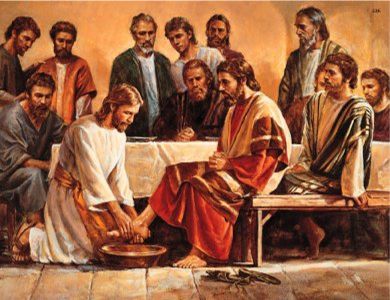 After having, on this day, washed the feet of His
disciples, Jesus said to them: 'Know ye what I have done to you? You call Me
Master and Lord: and You say well, for so I am. If then I, being your Lord and
Master, have washed your feet; you, also, ought to wash one another's feet. For
I have given you an example, that as I have done to you, so you do also.'[1]
Although the meaning of these words is that, after the example of our divine
Master, we should practice works of fraternal charity towards our neighbour, yet
the literal imitation of this our Saviour's act has always been observed in the
Church.
After having, on this day, washed the feet of His
disciples, Jesus said to them: 'Know ye what I have done to you? You call Me
Master and Lord: and You say well, for so I am. If then I, being your Lord and
Master, have washed your feet; you, also, ought to wash one another's feet. For
I have given you an example, that as I have done to you, so you do also.'[1]
Although the meaning of these words is that, after the example of our divine
Master, we should practice works of fraternal charity towards our neighbour, yet
the literal imitation of this our Saviour's act has always been observed in the
Church.
At the commencement, it was almost a daily practice. St. Paul, when mentioning the qualities which should adorn the Christian widow, includes that of washing the feet of the saints,[2] that is, of the faithful. We find this act of humble charity practised in the ages of persecution, and even later. The Acts of the saints of the first six centuries, and the homilies and writings of the holy fathers, are filled with allusions to it. Afterwards, charity grew cold, and this particular way of exercising it was confined, almost exclusively, to monasteries. Still, from time to time it was practiced elsewhere. We occasionally find kings and queens setting this example of humility. The holy king Robert of France, and, later, Saint Louis, used frequently to wash the feet of the poor. The holy queen St. Margaret of Scotland, and Saint Elizabeth of Hungary, did the same. The Church, with that spirit which makes her treasure up every recommendation of her divine Lord, has introduced this act of humility into her liturgy, and it is today that she puts the great lesson before her children. In every church of any importance, the prelate, or superior, honours our Saviour's condescension, by the ceremony called the washing of the feet. The bishops throughout the world follow the example set them by the sovereign Pontiff, who performs this ceremony in the Vatican. Yea, there are still to be found kings and queens who, on this day, wash the feet of the poor, and give them abundant alms.
The twelve apostles are represented by the twelve poor who, according to the most general practice, are chosen for this ceremony. The Pope, however, washes the feet of thirteen priests of as many different countries; and this is the reason of the ceremonial requiring this number for cathedral churches. But, why thirteen? Some have interpreted it thus: that it represented the full number of the apostolic college, which is thirteen; for St. Mathias was elected in Judas's place, and our Lord Himself, after His Ascension, called St. Paul to be an apostle. Other authors, however, and among them the learned Pope Benedict XIV,[3] assert that the reason of this number being chosen was the miracle related in the life of St. Gregory the Great. This holy Pope used, every day, to wash the feet of twelve poor men, whom he afterwards invited to his own table. One day, a thirteenth was present: it was an angel, whom God had sent, that He might thereby testify how dear to Him was the charity of His servant.
The ceremony of the washing of the feet is also called the Mandatum, from the first word of the first antiphon. After the deacon has chanted the Gospel of the Mass of Maundy Thursday, the celebrant takes off the cope, girds himself with a towel, and, kneeling down, begins to wash the feet of those who have been chosen. He kisses the right foot of each one after having washed it.
ENDNOTES
1. 1 St. John xiii. 12-15.
2 1 Tim. v. 10.
3 De Festis D. N.J. C. lib. I. cap. vi. no. 57
At the commencement, it was almost a daily practice. St. Paul, when mentioning the qualities which should adorn the Christian widow, includes that of washing the feet of the saints,[2] that is, of the faithful. We find this act of humble charity practised in the ages of persecution, and even later. The Acts of the saints of the first six centuries, and the homilies and writings of the holy fathers, are filled with allusions to it. Afterwards, charity grew cold, and this particular way of exercising it was confined, almost exclusively, to monasteries. Still, from time to time it was practiced elsewhere. We occasionally find kings and queens setting this example of humility. The holy king Robert of France, and, later, Saint Louis, used frequently to wash the feet of the poor. The holy queen St. Margaret of Scotland, and Saint Elizabeth of Hungary, did the same. The Church, with that spirit which makes her treasure up every recommendation of her divine Lord, has introduced this act of humility into her liturgy, and it is today that she puts the great lesson before her children. In every church of any importance, the prelate, or superior, honours our Saviour's condescension, by the ceremony called the washing of the feet. The bishops throughout the world follow the example set them by the sovereign Pontiff, who performs this ceremony in the Vatican. Yea, there are still to be found kings and queens who, on this day, wash the feet of the poor, and give them abundant alms.
The twelve apostles are represented by the twelve poor who, according to the most general practice, are chosen for this ceremony. The Pope, however, washes the feet of thirteen priests of as many different countries; and this is the reason of the ceremonial requiring this number for cathedral churches. But, why thirteen? Some have interpreted it thus: that it represented the full number of the apostolic college, which is thirteen; for St. Mathias was elected in Judas's place, and our Lord Himself, after His Ascension, called St. Paul to be an apostle. Other authors, however, and among them the learned Pope Benedict XIV,[3] assert that the reason of this number being chosen was the miracle related in the life of St. Gregory the Great. This holy Pope used, every day, to wash the feet of twelve poor men, whom he afterwards invited to his own table. One day, a thirteenth was present: it was an angel, whom God had sent, that He might thereby testify how dear to Him was the charity of His servant.
The ceremony of the washing of the feet is also called the Mandatum, from the first word of the first antiphon. After the deacon has chanted the Gospel of the Mass of Maundy Thursday, the celebrant takes off the cope, girds himself with a towel, and, kneeling down, begins to wash the feet of those who have been chosen. He kisses the right foot of each one after having washed it.
ENDNOTES
1. 1 St. John xiii. 12-15.
2 1 Tim. v. 10.
3 De Festis D. N.J. C. lib. I. cap. vi. no. 57
Saturday, April 23, 2011
A reading from an ancient homily for Holy Saturday
From http://www.vatican.va/spirit/documents/spirit_20010414_omelia-sabato-santo_en.html
The Lord's descent into hell
The Lord's descent into hell
"What is happening? Today there is a great silence over the earth, a great silence, and stillness, a great silence because the King sleeps; the earth was in terror and was still, because God slept in the flesh and raised up those who were sleeping from the ages. God has died in the flesh, and the underworld has trembled.
Truly he goes to seek out our first parent like a lost sheep; he wishes to visit those who sit in darkness and in the shadow of death. He goes to free the prisoner Adam and his fellow-prisoner Eve from their pains, he who is God, and Adam's son.
The Lord goes in to them holding his victorious weapon, his cross. When Adam, the first created man, sees him, he strikes his breast in terror and calls out to all: 'My Lord be with you all.' And Christ in reply says to Adam: ‘And with your spirit.’ And grasping his hand he raises him up, saying: ‘Awake, O sleeper, and arise from the dead, and Christ shall give you light.
‘I am your God, who for your sake became your son, who for you and your descendants now speak and command with authority those in prison: Come forth, and those in darkness: Have light, and those who sleep: Rise.
‘I command you: Awake, sleeper, I have not made you to be held a prisoner in the underworld. Arise from the dead; I am the life of the dead. Arise, O man, work of my hands, arise, you who were fashioned in my image. Rise, let us go hence; for you in me and I in you, together we are one undivided person.
‘For you, I your God became your son; for you, I the Master took on your form; that of slave; for you, I who am above the heavens came on earth and under the earth; for you, man, I became as a man without help, free among the dead; for you, who left a garden, I was handed over to Jews from a garden and crucified in a garden.
‘Look at the spittle on my face, which I received because of you, in order to restore you to that first divine inbreathing at creation. See the blows on my cheeks, which I accepted in order to refashion your distorted form to my own image.
'See the scourging of my back, which I accepted in order to disperse the load of your sins which was laid upon your back. See my hands nailed to the tree for a good purpose, for you, who stretched out your hand to the tree for an evil one.
`I slept on the cross and a sword pierced my side, for you, who slept in paradise and brought forth Eve from your side. My side healed the pain of your side; my sleep will release you from your sleep in Hades; my sword has checked the sword which was turned against you.
‘But arise, let us go hence. The enemy brought you out of the land of paradise; I will reinstate you, no longer in paradise, but on the throne of heaven. I denied you the tree of life, which was a figure, but now I myself am united to you, I who am life. I posted the cherubim to guard you as they would slaves; now I make the cherubim worship you as they would God.
"The cherubim throne has been prepared, the bearers are ready and waiting, the bridal chamber is in order, the food is provided, the everlasting houses and rooms are in readiness; the treasures of good things have been opened; the kingdom of heaven has been prepared before the ages."
Prayer
Almighty, ever-living God, whose Only-begotten Son descended to the realm of the dead, and rose from there to glory, grant that your faithful people, who were buried with him in baptism, may, by his resurrection, obtain eternal life.
(We make our prayer) through our Lord.
(Through Christ our Lord.)
Prepared by Pontifical University Saint Thomas Aquinas
Friday, April 22, 2011
Meditations for Good Friday
 From The Liturgical Year by Abbot Dom Guéranger, O.S.B.
 THE MORNING: The sun has risen upon Jerusalem. But the priests and scribes have not waited all this time without venting their rage upon Jesus. Annas, who was the first to receive the divine Captive, has had Him taken to his son-in-law Caiphas, the high priest. Here He is put through a series of insulting questions, which disdaining to answer, He receives a blow from one of the high priest’s servants. False witnesses had already been prepared: they now come forward, and depose their lies against Him who is the very Truth: but their testimony is contradictory. Then Caiphas, seeing that this plan for convicting Jesus of blasphemy is only serving to expose his accomplices, turns to another. He asks Him a question, which will oblige our Lord to make an answer; and in this answer he, Caiphas, will discover blasphemy, and blasphemy will bring Jesus under the power of the Synagogue. This is the question: ‘I adjure Thee, by the living God, that Thou tell us, if Thou be the Christ the Son of God! [1] Our Saviour, in order to teach us that we should show respect to those who are in authority, breaks the silence He has hitherto observed, and answers: Thou hast said it: I am: and hereafter ye shall see the Son of Man sitting on the right hand of the power of God, and coming in the clouds of heaven.’ [2] Hereupon, the impious pontiff rises, rends his garments, and exclaims: ‘He hath blasphemed! What further need have we of witnesses? Behold! now ye have heard the blasphemy: what think ye?’ The whole place resounds with the cry: ‘He is guilty of death!’ [3]
The Son of God has come down upon the earth in order to restore man to life; and yet, here we have this creature of death daring to summon his divine Benefactor before a human tribunal, and condemning Him to death! And Jesus is silent, and bears with these presumptuous, these ungrateful, blasphemers! Well may we exclaim, in the words wherewith the Greek Church frequently interrupts to-day’s reading of the Passion: ‘Glory be to thy patience, O Lord!’
Scarcely have the terrible words, ‘He is guilty of death,’ been uttered, than the servants of the high priest rush upon Jesus. They spit upon Him, and blindfolding Him, they strike Him, saying: ‘Prophesy, who is it that struck Thee?’ [4] Thus does the Synagogue treat the Messias, who, they say, is to be their glory! And yet, these outrages, frightful as they are, are but the beginning of what our Redeemer has to go through.
But there is something far more trying than all this to the heart of Jesus, and it is happening at this very time. Peter has made his way as far as the court of the high priest’s palace. He is recognized by the bystanders as a Galilean, and one of Jesus’ disciples. The apostle trembles for his life; he denies his Master, and affirms with an oath that he does not even know Him. What a sad example is here of the punishment of presumption! But Jesus has mercy on His apostle. The servants of the high priest lead Him near to the place where Peter is standing; He casts upon him a look of reproach and pardon; Peter immediately goes forth, and weeps bitterly. From this hour forward he can do nothing but lament his sin; and it is only on Easter morning, when Jesus shall appear to him after His Resurrection, that he will admit any consolation to his afflicted heart. Let us make him our model, now that we are spending these hours, with our holy mother the Church, in contemplating the Passion of Jesus. Peter withdraws, because he fears his own weakness; let us remain to the end, for what have we to fear? May our Jesus give us one of those looks, which can change the hardest and worst of hearts!
Meanwhile, the day-dawn breaks upon the city, and the chief priests make arrangements for taking Jesus before the Roman governor. They themselves have found Him guilty; they have condemned Him as a blasphemer, and according to the Law of Moses a blasphemer must be stoned to death. But they cannot apply the law: Jerusalem is no longer free, or governed by her own laws. The power over life and death may be exercised only by her conquerors, and that in the name of Cæsar. How is it that these priests and scribes can go through all this, and never once remember the prophecy of Jacob, that the Messias would come when the sceptre should be taken away from Juda? [5] They know off by heart, they are the appointed guardians of, those prophecies, which describe the death to which this Messias is to be put; and yet, they are the very ones who bring it about! How is all this? They are blind, and it is jealousy that blinds them.
The rumour of Jesus’ having been seized during the night, and that He is on the point of being led before the Roman governor, rapidly spreads through the city, and reaches Judas’ ears. This wretched man had a passion for money, but there was nothing to make him desire the death of his divine Master. He knew Jesus’ supernatural power. He perhaps flattered himself that He, who could command nature and the elements, would easily escape from the hands of His enemies. But now when he sees that He does not escape, and that He is to be condemned to death, he runs to the temple, and gives back the thirty pieces of silver to the chief priests. Is it that he is converted, and is about to ask his Master to pardon him? Alas, no! Despair has possession of him, and he puts an end to his existence. The recollection of all the merciful solicitations made to him, yesterday, by Jesus, both during the last Supper, and in the garden, gives him no confidence; it only serves to increase is despair. Surely, he well knew what a merciful Saviour he had to deal with! And yet, he despairs, and this at the very time when the Blood, which washes away the sins of the whole world, is about to be shed! He is lost, because he despaired.
The chief priests, taking Jesus with them, present themselves at the governor’s palace, demanding audience for a case of importance. Pilate comes forward, and peevishly asks them: ‘What accusation bring ye against this Man?’ They answer: ‘If He were not a malefactor, we would not have delivered Him up to thee.’ It is very evident, from these first words, that Pilate has a contempt for these Jewish priests; it is not less evident that they are determined to gain their cause. ‘Take Him you,’ says Pilate, ‘and judge Him according to your Law.’ The chief priests answer: ‘It is not lawful for us to put any man to death.’ [6]
Pilate leaves the hall, in order to speak with these men. He returns, and commands Jesus to be brought in. The Son of God and the representative of the pagan world are face to face. Pilate begins by asking Him: ‘Art Thou the King of the Jews?’ To this Jesus thus replies: ‘My kingdom is not of this world. If My kingdom were of this world, My servants would certainly strive that I should not be delivered to the Jews. But now My kingdom is not from hence’. ‘Art Thou a King, then?’ says Pilate. ‘Thou sayest,’ answers Jesus, ‘that I am a King.’ Having, by these last words, confessed His august dignity, our Lord offers a grace to this Roman; He tells him that there is something worthier of man’s ambition than earthly honours. ‘For this,’ says Jesus, ‘was I born, and for this came I into the world; that I should give testimony to the truth. Every one that is of the truth heareth My voice.’ ‘What is truth?’ asks Pilate; but without waiting for the answer, he leaves Jesus, for he is anxious to have done with this case. He returns to the Jews, and says to them: ‘I find no cause in Him.’ [7] Pilate fancies that this Jesus must be a leader of some Jewish sect, whose teachings give offence to the chief priests, but which are not worth his examining into them: yet at the same time, he is convinced that He is a harmless Man, and that it would be foolish and unjust to accuse Him of disturbing the state. Scarcely has Pilate expressed his opinion in favour of Jesus, than a long list of accusations is brought up against Him by the chief priests. Pilate is astonished at Jesus’ making no reply, and says to Him: ‘Dost Thou not hear how great testimonies they allege against Thee?’ [8] These words are kindly meant, but Jesus still remains silent: they, however, excite His enemies to fresh fury, and they cry out: ‘He stirreth up the people, teaching throughout all Judea, beginning from Galilee, even to this place.’ [9] This word Galilee suggests a new idea to Pilate. Herod, the tetrarch of Galilee, happens to be in Jerusalem at this very time. Jesus is his subject; He must be sent to him. Thus Pilate will get rid of a troublesome case, and this act of courteous deference will re-establish a good understanding between himself and Herod.
The Saviour is therefore dragged through the streets of Jerusalem, from Pilate’s house to Herod’s palace. His enemies follow Him with relentless fury; but Jesus still observes His noble silence. Herod, the murderer of John the Baptist, insults Him, and ordering Him to be clothed in a white garment, as a fool, he sends Him back to Pilate. Another plan for ridding himself of this troublesome case now strikes the Roman governor. At the feast of the Pasch, he had the power of granting pardon to any one criminal the people may select. They are assembled together at the court-gates. He feels sure that their choice will fall upon Jesus, for it is but a few days ago that they led Him in triumph through the city: besides, he intends to make the alternative one who is an object of execration to the whole people; he is a murderer, and his name Barabbas. ‘Whom will you that I release to you?’ says Pilate: ‘Barabbas, or Jesus, that is called the Christ?’ He has not long to wait for the answer: the crowd exclaim: ‘Not this man, but Barabbas!’ ‘What then,’ replies Pilate, ‘shall I do with Jesus, that is called the Christ?’ ‘Crucify Him.’ ‘Why, what evil hath He done? I will chastise Him, therefore, and let Him go.’ But they, growing irritated at this, cry out so much the louder: ‘Crucify Him! Crucify Him!’ [10]
Pilate’s cowardly subterfuge has failed, and left him in a more difficult position than he was before. His putting the innocent on a level with a murderer was in itself a gross injustice; and yet, he has not gone far enough for a people that is blind with passion. Neither does his promise to chastise Jesus satisfy them: they want more than His Blood; they insist on His death.
Here let us pause, and offer our Saviour a reparation for the insult He here receives. He is put in competition with a murderer, and the murderer is preferred! Pilate makes an attempt to save Jesus: but on what terms! He must be put on a footing with a vile wretch, and even so be worsted! Those very lips that, a few days back, sang ‘Hosannah to the Son of David,’ now clamour for His crucifixion! The city magistrate and governor pronounces Him innocent, and yet condemns Him to be scourged, because he fears a disturbance!
Jesus is made over to the soldiers to be scourged. They rudely strip Him of His garments, and tie Him to the pillar which is kept for this kind of torture. Fiercely do they strike Him; the Blood flows down His sacred Body. Let us adore this the second bloodshedding of our Jesus, whereby He expiates the sins we and the whole world have committed by the flesh. This scourging is by the hands of Gentiles: the Jews delivered Him up to be punished, and the Romans were the executioners: thus have we all had our share in the awful deicide.
At last the soldiers are tired; they loose their Victim; but it is not out of anything like pity. Their cruelty is going to rest, and their rest is derision. Jesus has been called King of the Jews: a king, say they, must have a crown! Accordingly, they make one for the Son of David! It is of thorns. They press it violently upon His head, and this is the third bloodshedding of Our Redeemer. Then, that they may make their scoffing perfect, the soldiers throw a scarlet cloak over His shoulders, and put a reed, for a sceptre, into His hand; and bending their knee before Him, they thus salute Him: ‘Hail, King of the Jews!’ This insulting homage is accompanied with blows upon His face; they spit upon Him; and, from time to time, take the reed from His hand, wherewith to strike the thorns deeper into His head.
Here, the Christian prostrates himself before his Saviour, and says to Him with a heart full of compassion and veneration: ‘Yes! my Jesus! Thou art King of the Jews! Thou art the Son of David, and therefore our Messias and our Redeemer! Israel, that hath so lately proclaimed Thee King, now unkings Thee; the Gentiles scoff at Thy royalty, making it a subject for keener insult; but reign Thou must, and over both Jews and Gentiles: over the Jews, by Thy justice, for they are soon to feel the sceptre of Thy revenge; over the Gentiles, by Thy mercy, for Thine apostles are soon to lead them to Thy feet. Receive, dearest King! our homage and submission! Reign now and for ever over our hearts, yea, over our whole being!’
Thus mangled and bleeding, holding the reed in His hand, and with the scarlet tatters on His shoulders, Jesus is led back to Pilate. It is just the sight that will soften the hearts of the people; at least, Pilate thinks so; and taking Him with him to a balcony of the palace, he shows Him to the crowd below, saying: ‘Behold the Man!’ [11] Little did Pilate know all that these few words conveyed! He says not: ‘Behold Jesus!’ nor, ‘Behold the King of the Jews!’ He says: ‘Behold the Man!’ Man—the Christian understands the full force of the word thus applied to our Redeemer. Adam, the first man, rebelled against God, and, by his sin, deranged the whole work of the Creator: as a punishment for his pride and intemperance, the flesh tyrannized over the spirit; the very earth was cursed, and thorns were to be its growth. Jesus, the new Man, comes into this world, bearing upon Him, not the reality, but the appearance, the likeness, of sin: in Him, the work of the Creator regains the primeval order; but the change was not wrought without violence. To teach us that the flesh must be brought into subjection to the spirit, Jesus’ Flesh was torn by the scourges; to teach us that pride must give way to humility, the only crown that Jesus wears is made of thorns. Yes, ‘Behold the Man!’ the triumph of the spirit over the flesh, the triumph of humility over pride.
Like the tiger that grows fiercer as he sees blood, so is Israel at the sight of Jesus after His scourging. ‘Crucify Him! Crucify Him!’—The cry is still the same. ‘Take Him you,’ says Pilate, ‘and crucify Him; for I find no cause in Him.’ And yet, he has ordered Him to be scourged enough to cause His death! Here is another device of the base coward; but it, too, fails. The Jews have their answer ready; they put forward the right granted by the Romans to the nations that are tributary to the empire. ‘We have,’ say they, ‘a law, and according to the law He ought to die; because He made Himself the Son of God.’ Disconcerted by this reply, Pilate takes Jesus aside into the hall, and says to Him: ‘Whence art Thou?’ Jesus is silent; Pilate was not worthy to hear the answer to his question. This silence irritates him. ‘Speakest Thou not to me?’ says he. ‘Knowest Thou not, that I have power to crucify Thee, and I have power to release Thee?’ Here Jesus deigns to speak; and He speaks in order to teach us that every power of government, even where pagans are in question, comes from God, and not from a pretended social compact: ‘Thou shouldst not have any power against Me, unless it were given thee from above. Therefore, he that hath delivered Me to thee, hath the greater sin.’ [12]
This dignified reply produces an impression upon Pilate: he resolves to make another attempt to save Jesus. But the people vociferate a threat which alarms him: ‘If thou release this Man, thou art not Cæsar’s friend; for whosoever maketh himself a king, speaketh against Cæsar.’ Still, he is determined to try and pacify the crowd. He leaves the hall, sits upon the judgment-seat, orders Jesus to be placed near him, and thus pleads for Him: ‘Behold your King!’ as though he would say, ‘What have you or Cæsar to fear from such a pitiable object as this?’ The argument is unavailing, and only provokes the cry: ‘Away with Him! Away with Him! Crucify Him!’ As though he did not believe them to be in earnest, Pilate says to them: ‘Shall I crucify your King?’ This time the chief priests answer: ‘We have no king but Cæsar.’ [13] When the very ministers of God can talk thus, religion is at an end. No king but Cæsar! Then, the sceptre is taken from Juda, and Jerusalem is cast off, and the Messias is come!
Pilate, seeing that nothing can quell the tumult, and that his honour as governor is at stake, decides on making Jesus over to His enemies. Though against his own inclination, he passes the sentence, which is to cause him such remorse of conscience that he will afterwards seek relief in suicide. He takes a tablet, and with astyle writes the inscription which is to be fastened to the cross. The people demand that two thieves should be crucified at the same time; it would be an additional insult to Jesus: this, too, he grants, fulfilling the prophecy of Isaias: And with the wicked was He reputed. [14] Having thus defiled his soul with the most heinous of crimes, Pilate washes his hands before the people, and says to them: ‘I am innocent of the Blood of this just Man; look ye to it!’ They answer him with this terrible self-imprecation: ‘His Blood be upon us and upon our children!’ [15] The mark of parricide here fastens on this ungrateful and sacrilegious people; Cain-like, they shall wander fugitives on the earth. Eighteen hundred years have passed since then; slavery, misery, and contempt, have been their portion; but the mark is still upon them. Let us Gentiles—upon whom the Blood of Jesus has fallen as the dew of heaven’s mercy—return fervent thanks to the goodness of our heavenly Father, who hath so loved the world, as to give it His only-begotten Son. [16] Let us give thanks to the Son, who, seeing that our iniquities could not be blotted out save by His Blood, shed it, on this day, even to the very last drop.
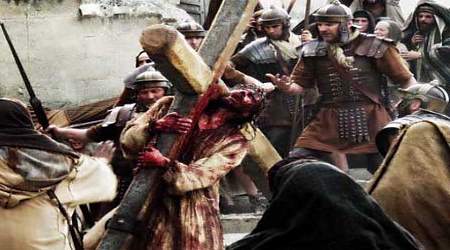
Here commences ‘the way of the cross’: the house of Pilate, where our Jesus receives the sentence of death, is the first station. Our Redeemer is consigned, by the governor’s order, into the hands of the Jews. The soldiers seize Him, and drag Him from the court. They strip Him of the scarlet cloak and bid Him clothe Himself with His own garments as before the scourging. The cross is ready and they put it on His wounded shoulders. The place where the new Isaac loads Himself with the wood of His sacrifice, is the second station. To Calvary!—this is the word of command, and it is obeyed: soldiers, executioners, priests, scribes, people—these form the procession. Jesus moves slowly on; but after a few paces, exhausted by the loss of Blood and by His sufferings, He falls under the weight of His cross. It is the first fall, and marks the third station.
He falls, not so much by the weight of His cross, as by that of our sins! The soldiers roughly lay their hands on Him, and force Him up again. Scarcely has He resumed His steps, than He is met by His afflicted Mother. The ‘valiant woman’, whose love is stronger than death, was not to be absent at such an hour as this. She must see her Son, follow Him, keep close to Him, even to His last breath. No tongue can tell the poignancy of her grief. The anxiety she has endured during the last few days has exhausted her strength. All the sufferings of Jesus have been made known to her by a divine revelation; she has shared each one of them with Him. But now she cannot endure to be absent, and makes her way through the crowd. The sacrifice is nigh its consummation; no human power could keep such a Mother from her Jesus. The faithful Magdalene is by her side, bathed in tears; John, Mary the mother of James the Less, and Salerno the mother of John, are also with her: they weep for their divine Master, she for her Son. Jesus sees her, but cannot comfort her, for all this is but the beginning of what He is to endure. Oh! what an additional suffering was this for His loving Heart, to see His Mother agonizing with sorrow! The executioners observe the Mother of their Victim, but it would be too much mercy in them to allow her to speak to Him; she may follow, if she please, with the crowd; it is more than she could have expected, to be allowed this meeting, which we venerate as the fourth station of the way of the cross.
But from this to the last there is a long distance, for there is a law that all criminals are to be executed outside the city walls. The Jews are afraid of Jesus’ expiring before reaching the place of sacrifice. Just at this time, they behold a man coming from the country, by name Simon of Cyrene; they order him to help Jesus to carry His cross. It is out of a motive of cruelty to our Lord, but it gives Simon the honour of sharing with Him the fatigue of bearing the instrument of the world’s salvation. The spot where this happens is the fifth station.

A little farther on, an incident occurs which strikes the executioners themselves with astonishment. A woman makes her way through the crowd, and setting the soldiers at defiance, comes close up to Jesus. She holds her veil in her hands, and with it respect-fully wipes the face of our Lord, for it is covered with blood, sweat, and spittle. She loves Jesus, and cares not what may happen to her, so she can offer Him this slight comfort. Her love receives its reward: she finds her veil miraculously impressed with the likeness of Jesus’ Face. This courageous act of Veronica marks the sixth station of the way of the cross.
Jesus grows weaker at each step: He falls a second time: it is the seventh station. Again do the soldiers violently raise Him up, and push Him along the road. It is easy to follow in His footsteps, for a streak of Blood shows where He has passed. A group of women is following close behind the soldiers; they heed not the insults heaped upon them; their compassion makes them brave. But the last brutal treatment’ shown to Jesus is more than they can bear in silence; they utter a cry of pitiful lamentation. Our Saviour is pleased with these women, who, in spite of the weakness of their sex, are showing more courage than all the men of Jerusalem put together. He affectionately turns towards them, and tells them what a terrible chastisement is to follow the crime they are now witnessing. The chief priests and scribes recognize the dignity of the Prophet that had so often spoken to them: they listen with indignation; and, at this the eighth station of the great way, they hear these words: ‘Daughters of Jerusalem! weep not over Me, but weep for yourselves and for your children. For behold the days shall come, wherein they will say: Blessed are the barren, and the wombs that have not borne, and the paps that have not given suck. Then shall they begin to say to the mountains: Fall upon us! And to the hills: Cover us!’ [17]
At last, they reach the foot of the hill. Calvary is steep; but it is the place of Jesus’ Sacrifice. He begins the ascent, but falls a third time: the hallowed spot is counted as the ninth station. A third time the soldiers force Jesus to rise and continue His painful journey to the summit of the hill, which is to serve as the altar for the holocaust that is to surpass all others in holiness and power. The executioners seize the cross and lay it upon the ground, preparatory to nailing the divine Victim to it. According to a custom practised both by the Romans and the Jews, a cup containing wine and myrrh is offered to Jesus. This drink, which had the bitterness of gall, was given as a narcotic, in order to deaden, in some degree, the feeling of the criminal, and lessen his pain. Jesus raises to His lips the cup, which is proffered Him rather from custom than from any idea of kindness; but He drinks not its contents, for He wishes to feel the full intensity of the suffering He accepts for our sake. Then the executioners, having violently stripped Him of His garments, which had fastened to His wounds, lead Him to the cross. The place where He was thus stripped of His garments, and where the cup of bitter drink was presented to Him, is venerated as the tenth station of the way of the cross. The first nine, from Pilate’s hall to the foot of Calvary, are still to be seen in the streets of Jerusalem; but the tenth and the remaining four are in the interior of the church of Holy Sepulchre, whose spacious walls enclose the spot where the last mysteries of the Passion were accomplished.
But we must here interrupt our history: we have already anticipated the hours of this great Friday, and we shall have to return, later on, to the hill of Calvary. It is time to assist at the service of our holy mother the Church, in which she celebrates the Death of her divine Spouse. We must not wait for the usual summons of the bells; they are silent; we must listen to the call of our faith and devotion. Let us, then, repair to the house of God.
References:
1. St. Matt. xxvi. 63
2. Ibid. 64.—St. Mark xiv. 62.
3. St. Matt. xxvi. 65, 66.
4. St. Luke xxii. 64.
5. Gen. xlix. 10.
6. St. John xviii. 29-31.
7. Ibid.33, 36, 37, 38
8. St. Matt. xxvii. 13.
9. St. Luke xxiii. 5.
10. St. Matt. xxvii.—St. Luke xxiii.—St. John xviii.
11. St. John xix. 5.
12. St. John xix.
13. Ibid.
14. Is liii. 12.
15. St. Matt. xxvii. 24, 25.
16. St. John iii. 16
17. St. Luke xxiii. 28-30.
Subscribe to:
Posts (Atom)